
Guide · Sat 21 Nov 2026
Jaipur Literature Festival 2027: the free festival, planned
The Jaipur Literature Festival returns from Thursday 14 to Monday 18 January 2027 at Hotel Clarks Amer, its 20th edition. It built its name as the world's great free festival, and registration is still the cheapest ticket in world literature, but it is no longer quite free, and the programme is not out yet. Here is what is confirmed, what registration really costs, and how to plan the trip.
Every January, the literary world decamps to Jaipur. Writers fly in from every continent, students arrive by the busload, and for five days a hotel lawn in the Pink City becomes the most interesting conversation on earth. The Jaipur Literature Festival's 20th edition runs from Thursday 14 to Monday 18 January 2027 at Hotel Clarks Amer, presented by Vedanta and produced by Teamwork Arts. It is routinely described as the greatest literary show on earth, and for once the billing is close to honest. What takes a little more care is the word free. The festival built its legend on free entry, and the legend needs a 2027 footnote. Here it is, with everything else you need to plan the trip.
What is confirmed, and what is not
Confirmed by the festival's official site, verified on 16 November 2026: the dates, Thursday 14 to Monday 18 January 2027; the venue, Hotel Clarks Amer on Jawahar Lal Nehru Marg; the edition, the 20th; and the presenter, Vedanta. If you remember the festival at Diggi Palace, update the picture: the festival's home is now the Clarks Amer, a large hotel property south of the old city, and that is where the sessions, the bookshop, the food stalls and the crowds all are.
Not yet published, and worth knowing before you plan around it: the full session by session programme. The festival announces its speakers in waves, and the first list for 2027 has been reported in Indian coverage since October, with names of the weight of Nobel laureates Esther Duflo and Olga Tokarczuk attached to it. Treat any speaker list you read now as partial. The timetable that tells you who is on which stage at what hour lands much closer to January, and the experienced festival goer plans the trip on the dates and builds the days once the programme drops. Jaipur Music Stage, the ticketed evening music strand that runs alongside the festival, is a separate programme with its own line-up announcements, and its 2027 names were not out at the time of checking either.
The free festival and what it costs
The festival's founding promise was that anyone could walk in and hear the world's writers for nothing, and that promise built its extraordinary, democratic crowd: Nobel laureates on stage, schoolchildren on the grass. Registration has been mandatory for years, and for 2027 the official registration page prices general registration from Rs 200, with student registration listed at Rs 100 to Rs 250, premium Friend of the Festival passes from Rs 14,500, and the publishing industry strand, Jaipur BookMark, from Rs 1,800. Those are the figures on the registration page as verified on 16 November 2026; check them again at checkout, because festival pricing tiers move as the dates approach.
So is it still the free festival? In spirit, largely yes: Rs 200 for five days of this programme is as close to free as world class culture gets, and no other festival of this scale lets a student hear a Nobel laureate for the price of a coffee. In letter, no: carry a small registration fee in the budget, register on the official site before you travel, and expect entry by the QR coded badge the registration issues. The paid tiers buy comfort rather than content: reserved seating areas, lounges and hospitality, which matter if five days of lawn sitting and queueing sounds like hard work, and matter not at all if you are happy in the crowd, which is where the festival's real energy is anyway.
It is worth understanding what that crowd is, because it explains the festival's hold on India. This is not a trade fair for the publishing industry with a public attached. School groups sit next to professors, taxi drivers argue about poetry with novelists, and a session on economics or history can draw the kind of crowd other countries reserve for sport. Sessions run in English, Hindi and a rotation of other Indian and world languages, often with writers switching between them mid sentence, and the audience treats the whole thing as a birthright rather than a treat. That is the real inheritance of the free years: even with a registration fee at the gate, the festival still belongs to the city in a way no ticketed event manages, and first time visitors consistently say the crowd itself was the best thing they saw.
How to work the five days
The amateur mistake is trying to see everything. On any given hour of the festival, several sessions run at once across the stages, and the programme rewards picking a thread: follow a writer, a language, an argument, rather than grazing. Arrive before the first session of the day, because entry queues build fast mid morning, and build your day around two or three anchor sessions with the gaps left open for the bookshop, the signings and the conversations that happen on the lawn, which regulars will tell you are half the point.
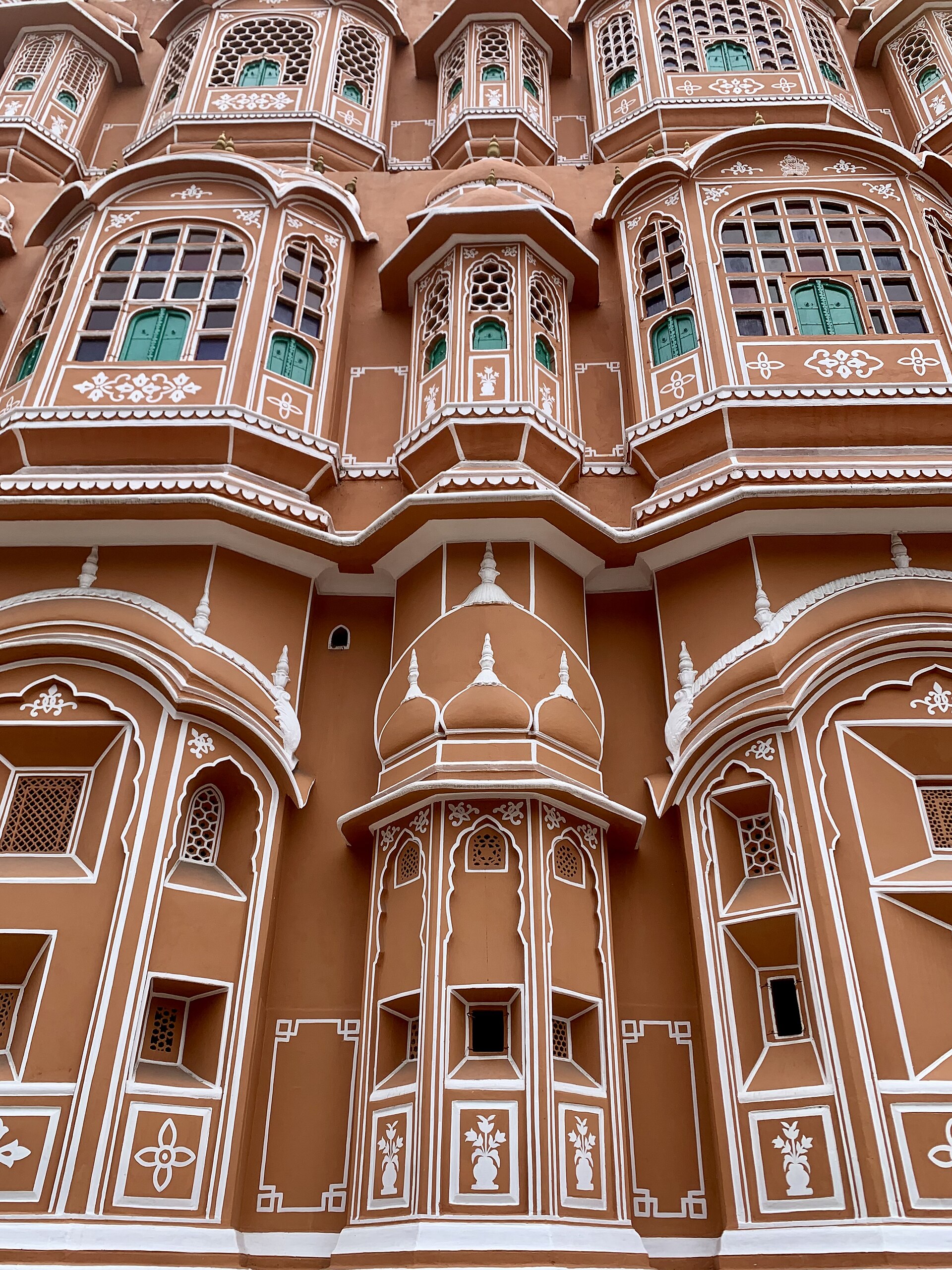
Pace the evenings separately. The old city is at its best after dark in January, and the festival days end early enough to use it: the Hawa Mahal facade lit up, the bazaars of the walled city still trading, dinner in the old town rather than at the venue. January in Jaipur is cold by Indian standards once the sun goes, with a real bite in the early morning, so the festival uniform is layers: warm at 9am, shirtsleeves by noon, a jacket again by six.
Getting the logistics right is unglamorous and decisive. Jaipur is an easy arrival, with its own international airport and a fast road and rail connection to Delhi, and most festival visitors simply fly in. The venue sits on the southern side of the city, so the daily pattern is a hotel to venue run rather than a stroll, and traffic on festival mornings is the one queue nobody warns you about: leave earlier than feels necessary for the first session of the day. Inside, the ground rules are the same as every great festival: popular sessions fill their tents, seating on the general registration is first come, and the seat you want for an 11am headliner is claimed by arriving for the 10am session and staying put. None of this is hardship. It is the texture of the thing, and the lawn between sessions, with its book stalls, food courts and arguments in progress, is where the festival quietly becomes unforgettable.
Seeing Jaipur around the sessions
You are in one of India's great sightseeing cities, and the festival hours leave the early mornings free, which is exactly when Jaipur is at its best. Amber Fort, the honey coloured palace fortress above the lake at Amer, opens the classic account and deserves a morning of its own. In the old city, the City Palace and the Jantar Mantar observatory sit together, with the Hawa Mahal a short walk away, and a guided full day strings the three of them plus Amber into one sensible sweep, which is the efficient way to do it between festival days.
Book a tour: All Inclusive Private Jaipur City Tourvia Viator · affiliate link
Where you stay is a festival decision as much as a sightseeing one. The venue is on Jawahar Lal Nehru Marg, south of the walled city, and a hotel on or near that axis makes the daily run painless; the old city hotels put the bazaars on your doorstep and the festival a drive away. Five nights over the festival dates is the full immersion; three nights, Thursday to Sunday or Friday to Monday, catches the thick of it. Book either early, because the festival fills the city's better rooms every year.
Stay in Jaipurvia Trip.com · affiliate link
The plan, in one pass
Register on the official site now, at whichever tier suits you, and do not pay any third party for festival entry. Book the Jaipur stay for the nights of 14 to 18 January before the good rooms near the venue go. Leave the session planning until the programme publishes, and hold one clear morning for Amber and the old city sights, ideally the day you arrive or the Monday, when the festival winds down. Then go and enjoy the happy problem of too many writers and too little day. Twenty editions in, the Jaipur Literature Festival remains the best value five days in world culture. It just asks Rs 200 for the privilege now, and honestly, that still counts as a bargain.
More reading on the articles page, or go straight to the events calendar.
Noteworthy events direct to your inbox.
Get what’s noteworthy for the weekend and beyond every Wednesday in your inbox.