
Guide · 2026年11月22日
Delhi in two days: the old city and the new, in the right order
Two days is the classic Delhi stopover, and the classic mistake is mixing the city's two halves into one exhausting blur. Day one belongs to Old Delhi: the Red Fort, Jama Masjid and the lanes of Chandni Chowk. Day two belongs to the new: Humayun's Tomb, India Gate and the Qutub Minar in the south. Here is the order that works, and why.
Delhi is not one city. It is a stack of cities built on the same ground over a thousand years, and the two that matter to a visitor pull in opposite directions: Shah Jahan's walled city of the 1600s in the north, dense, loud and glorious, and the imperial and modern capital spread across the centre and south, all avenues, gardens and stone. With two days, the winning move is to give each half its own day, in this order: the old city first, while your energy is high and the sensory shock is a pleasure, then the new city, where the distances are longer, the sights are grander and the pace can breathe.
Day one: Old Delhi
Start at the Red Fort, the red sandstone palace fortress from which the Mughal emperors ruled, and the building that anchors the old city both geographically and in the imagination. Go at opening time. The walls and pavilions are at their best in the early light, the tour groups have not yet arrived, and you will have the Diwan-i-Am and the palace pavilions along the riverfront in relative peace. The fort is a place to walk slowly rather than tick off: the scale of it lands gradually, gate by gate and court by court.
From the fort, the old city pulls you west. Jama Masjid, one of the largest mosques in India, stands on its hillock above the lanes, its courtyard open to the sky and its minarets giving the best panorama of the old city rooftops. Then give yourself to Chandni Chowk, the great bazaar street and the warren behind it: silver in one lane, spices in another, wedding finery in a third, and food everywhere. This is where Old Delhi stops being sightseeing and becomes an experience, and it is also where a first timer can lose the thread entirely, which is the honest case for walking it with a guide who eats there.
The food is not an add-on in Old Delhi, it is a headline act. The lanes carry some of the most storied eating in India: kebabs and breads around the mosque, jalebis fried to order at century old counters, chaat that sets the standard every other city argues with. A dedicated food and heritage walk strings the tastes into an order and a route, and four or five hours of it will teach you more about the city than a day of monuments.
Book a tour: The Great Indian Food Tour in Old Delhivia Viator · affiliate link
End the day as the old city does, with the evening call and the bazaars at full glow, then retreat. Old Delhi rewards a full day and punishes a rushed one; do not try to bolt a southern monument onto the end of it.
Two practical notes belong to day one. The old city is best done on foot and by metro, with cycle rickshaws for the lanes where nothing wider fits, and comfortable shoes are not a suggestion: between the fort, the mosque and the bazaar lanes you will cover serious ground on stone, much of it uneven. And pace the eating. The food walk advice applies even if you go unguided: graze small and often rather than sitting down to one large meal at noon, because Chandni Chowk's pleasures come in portions, and the afternoon version of you will be grateful. If the day leaves you with energy, the sound and light retelling of the fort's story after dark is the old city's own evening show, but an early night serves day two better.
Day two: the new city and the south
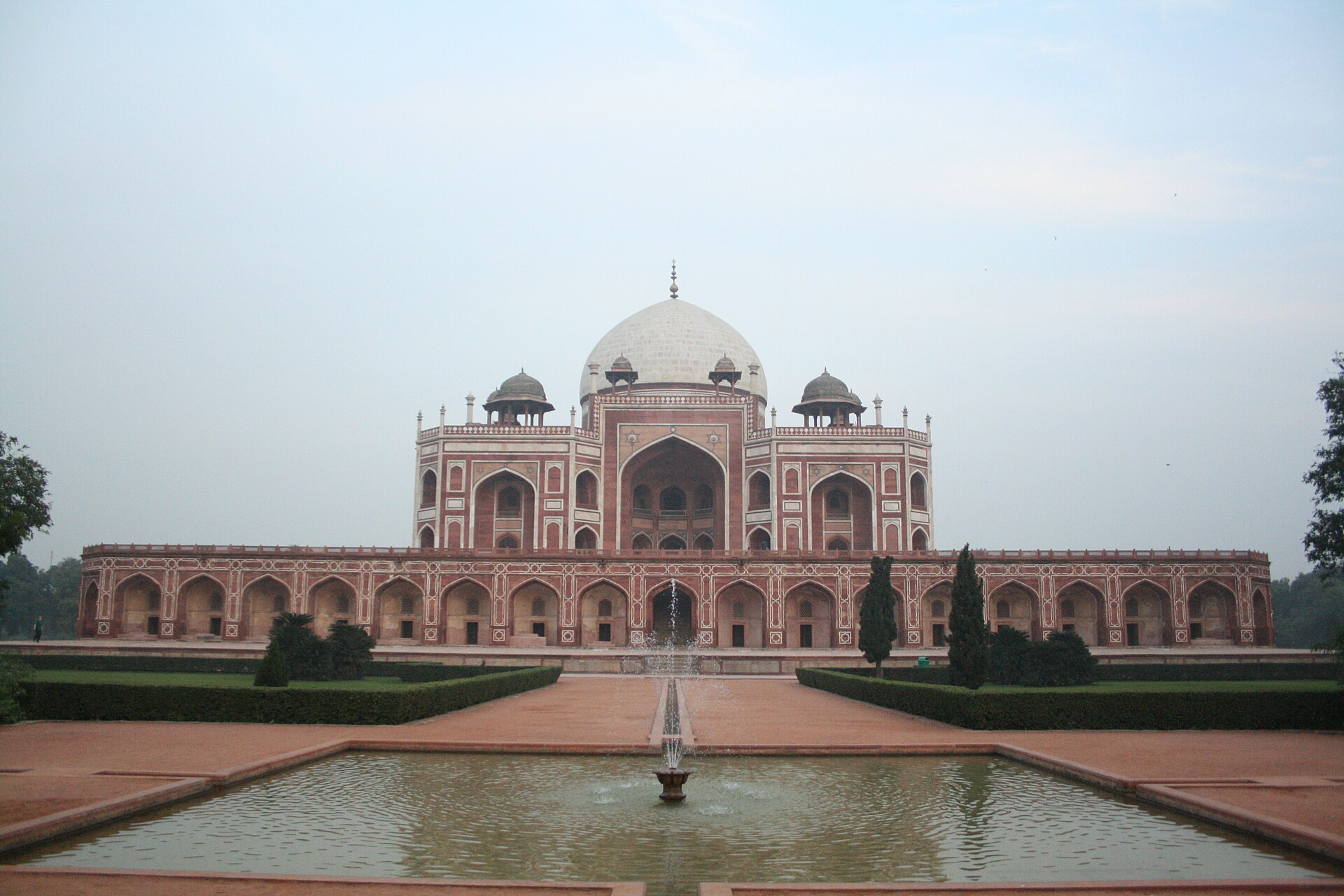
Day two runs on a different clock. Begin at Humayun's Tomb, the great garden tomb that set the template the Taj Mahal later perfected: red sandstone and white marble, a perfect dome, and charbagh gardens that are a pleasure to walk in the morning cool. It is the single most beautiful building in Delhi for many visitors, and the calmest possible start after the old city's beautiful chaos.
From there, work through the imperial centre: India Gate and the Kartavya Path boulevard, the ceremonial heart of the capital, best taken as a drive past and a walk rather than a long stop. If a museum belongs in your two days, this is the day for it, in the air-conditioned middle of the day. Then head south, because the Qutub Minar complex is the third act the day is building towards: the soaring 12th century victory tower, the oldest mosque in northern India built from temple stone, and the rustless iron pillar that has puzzled metallurgists for centuries. Late afternoon flatters the stone and thins the crowds.
If the day has a spare hour, give it to Lodhi Gardens, the green lung between the tomb country and the centre, where 15th and 16th century tombs stand in lawns full of Delhi walking its dogs, doing its yoga and playing its cricket. It is the city's favourite park and the most human scale stop of the two days, and it sits naturally on the route between Humayun's Tomb and the imperial centre. Khan Market, on its edge, is the handy lunch stop: bookshops, cafes and some of the most storied kebab counters in the capital, all in two tidy rows.
A private full day tour exists precisely because day two is spread across the whole map of Delhi, and plenty of visitors sensibly hand the logistics to a driver and guide and spend their attention on the buildings. The same product also covers day one's ground, so it doubles as the one booking version of this whole itinerary for anyone who prefers it guided end to end.
Book a tour: Old and New Delhi Private Full-Day Sightseeing Tourvia Viator · affiliate link
The practical layer
Base yourself centrally: Connaught Place and the streets south of it put the metro, the old city run north and the tomb and tower run south all within sensible reach, and the airport express keeps the arrival simple. Delhi runs on the metro better than on its roads at peak hours, and the old city day in particular is a metro and walking day, not a car day.
On monument hours, a word of honest caution. The great ASI monuments keep long days, generally sunrise to evening, but opening patterns and weekly closures have been reported differently by different sources this year, and the Red Fort's Monday position in particular is contested between current guides and a reported 2026 ASI order. Do not build a two day plan that collapses if one site rests on one day: the order in this guide survives a swap of the two days, and the safe move is to check the ASI booking calendar for your exact dates before you fix the plan. Ticket prices likewise vary by visitor category and change by order; buy at the official channel and treat any price printed in any guide, including this one, as history.
Finally, the season note: Delhi's sightseeing sweet spot runs from late autumn through winter into early spring, when the mornings are cool and the monuments are a pleasure on foot. Winter brings its own footnote, morning fog that can delay flights and trains and a murk that usually burns off by mid morning, so put the tomb and garden time after nine and let the fort take the early slot on day one. Summer heat and monsoon humidity rewrite every itinerary in this city, and if your two days fall then, shift everything earlier, lean on the guided car for day two, and let the food day carry the trip. Done in the right order, two days in Delhi is not a compromise. It is the city's essential argument, old against new, made in forty eight hours.
值得注目的活動,直接送到你的信箱。
每週三,把週末及之後值得注目的活動,直接送到你的信箱。